 Smart
SmartA trader with three open NZD positions across different pairs feels diversified. They are not. NZD/USD and NZD/JPY correlate above +0.7 in most conditions, which means those two “separate” trades behave more like one large position with extra transaction costs. For NZD-focused traders, understanding correlation risk is the difference between deliberate exposure and accidental concentration — and the maths is less forgiving than most expect.
The Diversification Illusion
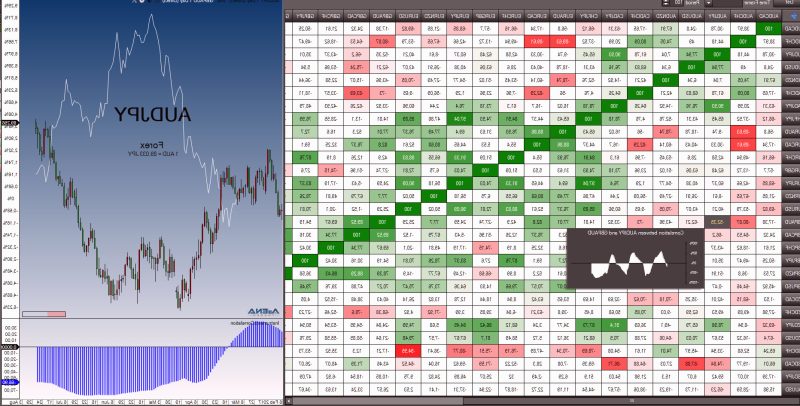
Three Positions, One Bet
A trader opens a long position on NZD/USD because the RBNZ held rates while the Fed signalled cuts. Sensible enough. Then they open a long on NZD/JPY, reasoning that yen weakness adds a second opportunity. Then NZD/EUR, because the eurozone data was soft. Three positions, three different pairs, three separate analyses. It feels like diversification.
It is not. All three trades are, at their core, a single bet: the New Zealand dollar will strengthen. If tomorrow dairy auction disappoints, or a global risk-off event sends capital fleeing from commodity currencies, all three positions lose simultaneously. The “diversification” vanishes in exactly the conditions where it was supposed to protect you.
This is the central problem with correlation risk in a currency-focused portfolio. The number of open positions is not the same as the number of independent bets. A trader with three correlated NZD longs and a trader with one NZD long at triple the position size have functionally identical risk profiles — except the first trader does not realise it.
What Correlation Actually Measures
Correlation is measured on a scale from +1 to -1. A coefficient of +1 means two pairs move in perfect lockstep: when one rises 0.5%, the other rises 0.5%. A coefficient of -1 means they move in perfect opposition. Zero means no measurable relationship — the movements of one pair tell you nothing about the other.
In practice, you rarely see values at the extremes. NZD/USD and NZD/JPY typically sit between +0.65 and +0.85 over a 30-day rolling window. The correlation is high but not perfect, because while both are NZD-strength trades, the denominator currencies respond to different central banks and different economic conditions. When the Fed surprises hawkish and the BOJ does nothing, NZD/USD might drop sharply while NZD/JPY holds steady. That is the imperfect correlation at work.
NZD/AUD is the interesting outlier among NZD pairs. It typically correlates with NZD/USD at only +0.3 to +0.5, because the cross rate is measuring the difference between two very similar economies rather than the absolute strength of either currency. Australia and New Zealand share commodity exposure, China trade dependence, and roughly similar rate cycles. The NZD/AUD rate moves on the gaps between them — a drought in Canterbury, a mining boom in Western Australia, a divergence in central bank timing — not on the broad risk sentiment that drives NZD/USD.
Why Correlations Shift (and When It Matters Most)
Correlation coefficients are averages, and averages can mislead. The +0.75 correlation between NZD/USD and NZD/JPY is a 30-day or 90-day rolling figure that smooths over periods of divergence and convergence. What matters for risk management is not the average but the behaviour at the tails.
During periods of market stress — a credit event, a geopolitical shock, a sudden unwinding of carry trades — correlations between risk-sensitive currencies tend to spike toward +1. NZD, AUD, and other commodity currencies sell off together as capital flows to safe havens. The pairs that showed moderate correlation during calm markets start moving in lockstep precisely when you most need them to behave independently.
This is not a theoretical concern. During the COVID sell-off in March 2020, the 30-day correlation between NZD/USD and NZD/JPY compressed to near-zero briefly as the yen strengthened on safe-haven flows while the USD also strengthened. But the NZD side of both trades — the part the NZD trader cared about — collapsed in unison. A portfolio “diversified” across NZD pairs experienced the full, concentrated loss on the common element.
The practical takeaway: size your combined NZD exposure for the stressed correlation, not the average correlation. If you build your risk limits assuming +0.7 and the actual correlation spikes to +0.95, your effective exposure blows past your intended limit at the worst possible moment.
The NZD Correlation Matrix
NZD/USD and NZD/JPY: The Twins
NZD/USD and NZD/JPY are the pair that most clearly demonstrates how correlation works at the currency level. Both are fundamentally NZD-strength or NZD-weakness trades. When the RBNZ raises rates unexpectedly, both pairs rally. When dairy prices drop or NZ GDP disappoints, both pairs sell off. The NZD is the common factor, and it dominates the price action.
The difference is in the denominator. The USD moves on Fed policy, US employment data, and US treasury yields. The JPY moves on BOJ policy, Japanese inflation expectations, and global risk appetite — the yen status as a safe-haven currency gives it a unique sensitivity to fear. When the driver of the day is NZD-specific, the twins move together. When the driver is denominator-specific, they can diverge meaningfully.
A BOJ intervention, for example, might strengthen the yen sharply while the USD is unchanged. In that scenario, NZD/JPY drops while NZD/USD holds flat. That divergence is real, but it is driven by the JPY, not by any independence in your NZD exposure. Your NZD risk has not been reduced by holding both pairs. You have simply added yen exposure on top of your NZD position.
The practical consequence: if you are long both NZD/USD and NZD/JPY, treat your NZD exposure as the combined notional of both positions, not as two independent trades with separate risk.
NZD/AUD: The Partial Exception
NZD/AUD is the one NZD pair that provides genuine, structural diversification against NZD/USD — and it does so for reasons worth understanding.
The Australian and New Zealand economies share enough DNA that their currencies tend to rise and fall together against the rest of the world. Both are commodity exporters. Both are sensitive to Chinese demand. Both central banks tend to face similar inflation and growth cycles, though not always simultaneously. When global risk appetite is the dominant driver, AUD and NZD move as a bloc, and the NZD/AUD cross rate barely twitches.
Where NZD/AUD comes alive is when the relative story between the two economies shifts. An RBNZ rate hike while the RBA holds steady pushes NZD/AUD higher regardless of what is happening to risk appetite globally. A milk price crash affecting NZ while Australian iron ore holds firm pushes it lower. These are fundamentally different drivers from what moves NZD/USD, which is why the correlation between NZD/AUD and NZD/USD is relatively low.
For portfolio construction, this means NZD/AUD is the NZD pair you can add to an NZD/USD position with a genuine expectation of diversification benefit. You are trading the gap between two similar economies rather than doubling your bet on NZD strength. That gap is narrower and less volatile, but it is authentically independent.
The AUD/USD Shadow
AUD/USD and NZD/USD are the most correlated major pair combination in the forex market. Over any 90-day rolling window, the correlation typically sits between +0.85 and +0.95. They are, for most practical purposes, the same trade with different pip values and slightly different volatility characteristics.
This matters because many NZD traders also watch and trade AUD/USD, especially when NZD/USD is quiet. They see it as trading a different pair. In terms of risk, it is adding to the same position. A 2% move against commodity currencies will hit both pairs, and your combined loss will reflect the correlated exposure you may not have intended.
There is a productive use for this correlation, though. Because AUD/USD has significantly higher daily volume than NZD/USD, it often moves first. Australian economic data releases, being from a larger economy, tend to move the AUD before the NZD reacts sympathetically. A sharp AUD/USD sell-off at 11:30am NZST on an Australian employment miss is a warning signal for NZD/USD that frequently arrives minutes to hours before the Kiwi follows.
Treat AUD/USD as a lead indicator for NZD/USD sentiment, not as a portfolio diversifier. If you are already long NZD/USD and you add a long AUD/USD position, your effective commodity-currency exposure has roughly doubled. If you are watching AUD/USD for confirmation signals before entering NZD/USD, the correlation is working for you rather than against you.
Calculating Your Actual Exposure
Effective Position Size: What You Are Really Risking
Position sizing in a correlated portfolio is not as simple as applying your standard risk percentage to each trade independently. If your rule is “risk 1% per trade” and you have three positions that are 80% correlated, your actual portfolio risk is substantially higher than 3%.
The simplified formula for combining two correlated positions is: effective exposure equals the square root of (position one squared, plus position two squared, plus two times the correlation times position one times position two). In concrete terms: if you have one standard lot on NZD/USD and one standard lot on NZD/JPY with a correlation of +0.8, your effective NZD exposure is not 2.0 lots. It is approximately 1.9 lots — calculated as the square root of (1 + 1 + 2 times 0.8 times 1 times 1), which equals the square root of 3.6, or roughly 1.90.
That might look like a small difference, and in this simple example it is. But the gap widens with more positions and higher correlations. Three positions of one lot each, all correlated at +0.8, produce an effective exposure of approximately 2.7 lots — not 3.0. And if correlations spike to +0.95 during a stress event, that same three-position portfolio effective exposure jumps to 2.9 lots — nearly the same as holding a single position of 3 lots with no diversification benefit at all.
Your risk per trade needs to account for the aggregate. If your maximum acceptable NZD exposure is 2 lots, and the correlation between your planned positions is +0.8, size each position so the combined effective exposure stays within that 2-lot limit.
The Stress Test You Should Run
Take your current open positions — or, if you have none open right now, use your typical portfolio from last month journal. List every position that includes the NZD on either side: NZD longs, NZD shorts, and any AUD positions that function as NZD proxies.
Now assume the NZD drops 2% against the board overnight. This is not an extreme scenario — it is roughly what happens when an RBNZ decision genuinely surprises the market, or when a global risk-off event sweeps through commodity currencies. Apply a 2% adverse move to the NZD side of each position and calculate your total portfolio loss in dollar terms.
For most NZD-focused traders, the number is larger than expected. A trader with one lot each on NZD/USD, NZD/JPY, and NZD/GBP, all long, discovers that a 2% NZD drop costs them roughly USD 600 per lot across all three positions. That is USD 1,800 in combined losses from what felt like three separate, manageable trades.
Run the same test with a 4% move — the kind of drawdown that can develop over a week during a genuine macro shift. If the combined number represents more than 5% of your account equity, you have more NZD concentration than is prudent, regardless of how many different pairs the positions are spread across. The number of positions is not the same as the amount of diversification.
Building a Portfolio That Actually Diversifies
The Core-Satellite Approach
A practical portfolio structure for NZD-focused traders starts with acknowledging the concentration and managing it deliberately rather than pretending it away.
The core position is your primary NZD trade — typically NZD/USD, because it has the tightest spreads and deepest liquidity. Size this position according to your standard risk rules. This is your NZD directional bet, and it should stand on its own analysis.
Satellite positions are additional trades that must pass a diversification test before you add them. NZD/AUD qualifies because it is driven by the NZ-Australia relative story rather than NZD absolute strength. A non-NZD pair like EUR/GBP qualifies if you have an independent analytical view on it — but only if the view is genuinely independent, not “I think EUR is weak” derived from the same risk sentiment driving your NZD view.
The governing rule: your total effective NZD exposure, calculated using the correlation-adjusted formula, must not exceed the risk limit you would set for a single trade. If that limit is 2% of account equity, then your combined correlated positions cannot lose more than 2% under a reasonable adverse scenario. This often means your individual position sizes are smaller than they would be if each trade were truly independent — and that adjustment is the price of honesty about correlation.
When Correlation Is Your Friend
Correlation is a risk management tool, not an inherent problem. There are situations where concentrated, correlated exposure is exactly the right approach.
If your RBNZ analysis gives you high conviction that the central bank will surprise with a 50 basis point cut and you believe the NZD will weaken sharply, running NZD shorts across multiple pairs is a deliberate concentration strategy. You are maximising exposure to a specific view. That is a legitimate trading decision — provided you have sized the combined position knowing it is functionally a single large bet, and provided your stop-loss accounts for the full correlated exposure.
The distinction that matters is between intentional concentration and accidental concentration. The trader who opens three NZD longs knowing they are tripling their NZD exposure, with position sizes adjusted accordingly, is making an informed decision. The trader who opens three NZD longs believing they are diversified, with each position sized as if it were independent, is running triple the risk they intended.
Every correlated position added to your portfolio should be accompanied by a conscious thought: “I am increasing my NZD exposure by approximately X, bringing my total effective NZD risk to Y.” If you cannot state those numbers, you do not have enough information to add the position.
Monitoring Correlation Over Time
Correlation is a moving target. The +0.75 coefficient between NZD/USD and NZD/JPY this month might be +0.60 next month if the BOJ shifts its policy stance, or +0.90 if a global risk event tightens all correlations. Treating last quarter correlation as permanent is a common and avoidable mistake.
A monthly check is sufficient for most traders. TradingView offers a correlation indicator that you can overlay on any pair — add it to your NZD/USD chart and set the comparison symbol to NZD/JPY, and the rolling correlation displays beneath the price chart. Mataf.net provides a free forex correlation matrix with adjustable timeframes. Myfxbook offers a similar tool. Any of these will show you the current state of NZD pair correlations in under two minutes.
What to watch for: a significant shift in correlation — say, NZD/AUD correlation with NZD/USD jumping from its usual +0.35 to +0.65 — signals that the independent driver of NZD/AUD has weakened and the pair is moving with the NZD bloc. That means your diversification benefit from NZD/AUD has diminished, and your effective exposure is higher than your original sizing assumed. Adjust by reducing position size or closing the satellite trade.
The opposite shift is equally useful. If NZD/JPY correlation with NZD/USD drops significantly, it might signal an opportunity to add NZD/JPY as a genuinely diversifying position that it was not during the previous high-correlation period.
Correlation does not make a portfolio dangerous. Ignorance of correlation does. The NZD trader who sizes three correlated positions as if they were independent is carrying risk they have not measured and cannot manage. The trader who understands their effective exposure and sizes accordingly might hold exactly the same positions — they just know what they are actually betting on.