 Smart
SmartNew Zealand’s currency has a dairy problem — or, depending on your perspective, a dairy advantage. No other G10 currency is so tightly bound to a single commodity, and no other commodity runs through such a specific supply chain: Waikato cows to Fonterra processing to GDT auctions to Chinese supermarket shelves.
When whole milk powder prices move 5% at a Tuesday night auction, the NZD moves with them before most of the world has woken up.
The Supply Chain Nobody Outside NZ Thinks About
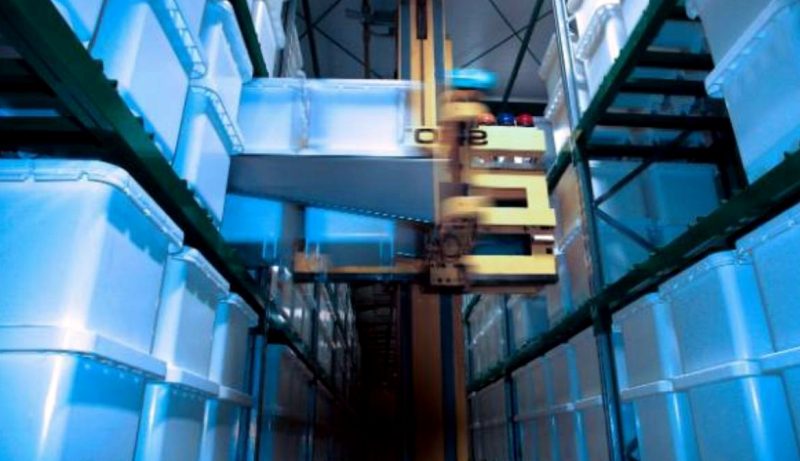
From Waikato Paddock to Shanghai Supermarket Shelf
New Zealand is the world’s largest exporter of dairy products by a considerable margin. The supply chain starts on roughly 11,000 farms spread across the Waikato, Canterbury, Southland, and Taranaki regions, where around five million cows produce approximately 22 billion litres of milk per year. Fonterra, the farmer-owned cooperative, collects and processes about 80% of that milk, converting it into whole milk powder, skim milk powder, butter, anhydrous milk fat, casein, and cheese for export.
China takes the largest share. In a typical year, roughly 35-40% of NZ dairy exports by value head to China, with the product mix weighted toward whole milk powder and infant formula ingredients. The next largest markets — Southeast Asia, the Middle East, and Japan — are significant but individually much smaller. This concentration means the health of the NZ dairy export sector, and by extension a substantial portion of the NZ economy, rises and falls with Chinese purchasing behaviour.
The chain from paddock to price action runs through several links: farm production feeds into Fonterra processing, processing output is sold via the Global Dairy Trade platform, GDT prices feed into Fonterra’s farmgate milk price forecast, and that forecast drives farm incomes, rural spending, and ultimately GDP. At each link, the information flows into currency markets.
A trader in London or Singapore may never have visited the Waikato, but if they trade NZD, they are implicitly making a bet on what happens there.
Why Infant Formula Changed Everything
The event that permanently rewired Chinese dairy demand — and by extension, NZ’s trade profile — was the 2008 melamine contamination scandal. Six infants died and nearly 300,000 were sickened after domestic Chinese dairy producers added melamine to milk to artificially inflate protein readings. The scandal was not a single bad actor; it was systemic, involving 22 companies and exposing regulatory failures across the Chinese dairy industry.
The aftermath was a structural shift in consumer behaviour. Chinese parents, unwilling to trust domestic formula, shifted massively to imported products. New Zealand and Australian brands became the default safe option, and that preference proved remarkably durable. Even a decade later, imported formula commanded a significant premium in Chinese retail, and NZ-origin products were especially valued.
Fonterra and its subsidiary brands found themselves supplying a market where demand was driven not by price competitiveness but by trust — a rare and valuable position in commodity markets.
This demand was directly linked to Chinese birth rates. Each cohort of newborns represented a new class of formula consumers, with the premium imported product cycle lasting roughly 12-18 months per child. When Chinese births peaked at 17.86 million in 2016, NZ dairy was exporting into enormous demand. When births declined to under 9 million by 2023, that demand base contracted significantly. The link between Chinese demographics and NZD is not theoretical — it flows through a supply chain that converts birth certificates in Guangzhou into export receipts in Auckland.
GDT Auctions: The Fortnightly Pulse Check
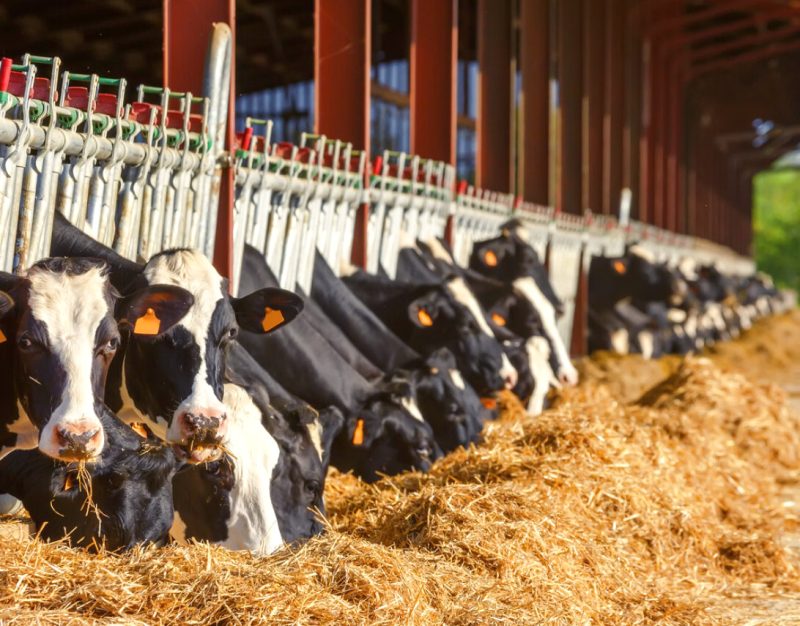
How the Global Dairy Trade Platform Works
The Global Dairy Trade platform runs auctions twice per month, typically on the first and third Tuesdays. The format is an ascending-price clock auction: products are offered at a starting price, bidders indicate how much they want to buy, and the price increases in rounds until supply matches demand. Each auction consists of multiple bidding rounds that can take several hours, with results finalised and published once all rounds complete.
The auction covers several product categories, but the ones that move NZD are whole milk powder (by far the largest by volume and most relevant to NZ exports), skim milk powder, anhydrous milk fat, and butter. Each product trades across multiple contract periods, from near-term delivery to six months out. The headline output is the GDT Price Index, which aggregates price changes across all products as a single percentage figure — “GDT up 2.4%” or “GDT down 3.1%.”
The auction runs overnight New Zealand time, with results typically available by 6-7am NZT. This timing means the initial NZD reaction occurs in the Asian session, often before European traders have reached their desks. For NZ-based traders, this is one of the few data points where being in the NZ time zone provides a genuine informational advantage — you are awake when the result drops, and you can act on it before the larger liquidity pools in London and New York have fully priced it in.
Reading GDT Results Like a Currency Trader
The headline GDT Price Index is what news services report, but it is not the most useful number for NZD trading. Whole milk powder prices matter more because WMP represents the largest share of NZ dairy exports to China and is the product most sensitive to Chinese demand shifts. A GDT auction where the overall index is flat but WMP fell 4% is bearish for NZD, even though the headline looks benign.
Volume data adds another layer. GDT publishes the quantity sold alongside prices, and the combination tells a different story than price alone. Prices rising on increasing volumes suggest genuine demand recovery — buyers are willing to pay more and purchase more. Prices rising on declining volumes may indicate a supply-driven move (Fonterra offered less product, pushing prices up artificially) that is less likely to be sustained.
The link to Fonterra’s farmgate milk price is the mechanism that connects GDT results to the broader NZ economy. Fonterra issues a forecast milk price per kilogram of milk solids at the start of each season, then revises it as GDT auctions accumulate. A forecast upgrade from, say, NZD 7.50 to NZD 8.00 per kgMS translates directly into higher farm incomes across New Zealand.
Those income gains flow through to rural towns, agricultural service businesses, and eventually consumer spending nationwide. The RBNZ watches farmgate price forecasts closely, and a sustained run of strong GDT auctions can shift monetary policy expectations — which is the point where dairy prices start moving the OCR, and therefore the NZD, through the interest rate channel as well.
The NZD Reaction Window: Timing and Magnitude
The NZD response to a GDT auction follows a reasonably predictable pattern, though the magnitude varies. The initial move typically occurs between 6am and 9am NZT as Asian session traders price in the result. A GDT change of 3% or more in either direction reliably moves NZD/USD 15-30 pips in that session. Smaller changes tend to be absorbed without a distinct reaction unless they confirm or contradict a prevailing trend.
The surprise element is critical. Markets develop expectations for each auction based on dairy futures pricing, seasonal production patterns, and the preceding auction result. A 4% gain after three consecutive declines is more impactful than a 4% gain after three consecutive gains, because the former represents a trend reversal while the latter is priced into existing momentum. Traders who track NZX dairy futures in the days before an auction can gauge the market’s expectation and therefore estimate how much surprise value a given result contains.
The decay pattern is worth noting. The GDT effect on NZD typically plays out over 12-24 hours, after which it is absorbed into the broader flow of currency market drivers. By the time London opens fully, the dairy move has usually been incorporated, and the NZD is trading on whatever the dominant European and US session theme happens to be.
This means the cleanest GDT trade is a short-duration position: enter on the result, take profit during the Asian or early European session, and do not expect the dairy signal to persist beyond a day. The exception is when a GDT result triggers a Fonterra forecast revision, which can sustain NZD direction for days or weeks.
Terms of Trade: Where Dairy Prices Meet the Current Account
Dairy as the Single Largest Terms-of-Trade Driver
Terms of trade measure the ratio of a country’s export prices to its import prices. When terms of trade improve, each unit of exports buys more imports — the country is effectively getting richer from trade. For New Zealand, dairy prices are the single largest determinant of terms-of-trade movements because dairy dominates the export basket while the import basket is more diversified across fuel, machinery, vehicles, and manufactured goods.
The arithmetic is stark. Dairy accounts for roughly 25% of NZ goods exports by value. Oil and fuel account for a large share of imports but are priced on global markets that NZ cannot influence. When dairy prices rise 10% and oil prices are stable, NZ terms of trade improve by approximately 2-2.5% — a meaningful shift that shows up in the national accounts within a quarter. When dairy and oil prices move in the same direction (both up or both down), the terms-of-trade effect is muted because the export and import sides partially offset.
Currency theory holds that improving terms of trade should appreciate the exchange rate, and the empirical evidence for NZ supports this. Research from the Reserve Bank has consistently found terms of trade to be a statistically significant driver of the real effective exchange rate. The channel is both direct (higher export prices generate more foreign currency that must be converted to NZD) and indirect (improved terms of trade signal a stronger economy, attracting capital inflows).
For NZD traders, a sustained dairy rally is not just a commodity story — it is a macroeconomic upgrade that the exchange rate will eventually reflect.
The Current Account Channel
The current account is the broadest measure of NZ’s trade with the world, encompassing goods, services, income flows, and transfers. New Zealand has run a current account deficit for decades — we import more than we export, and we pay more investment income to foreigners than we receive. This structural deficit requires constant foreign capital inflow to finance, which creates a persistent headwind for the NZD.
Higher dairy prices narrow the deficit by improving the goods trade balance. If dairy export revenue rises by NZD 2 billion in a year while imports remain constant, the current account deficit shrinks by that amount, reducing the quantity of NZD that needs to be sold to fund the gap. The marginal selling pressure on the NZD decreases, and all else being equal, the currency strengthens.
This channel operates slowly — over quarters rather than days — but it sets the underlying direction that shorter-term flows amplify. A trader looking at a single GDT auction is watching the leading edge of a process that takes 6-12 months to fully work through the current account.
The sharp end of the dairy-NZD link is the GDT reaction in Asian trading hours. The blunt end is the quarterly current account data showing a smaller deficit six months later. Between those two points, a persistent dairy trend creates a gravitational pull on the NZD that interacts with everything else — rate differentials, risk sentiment, USD moves — but does not disappear just because other forces are temporarily dominant.
Measuring the Correlation: Dairy Prices and NZD Over Time
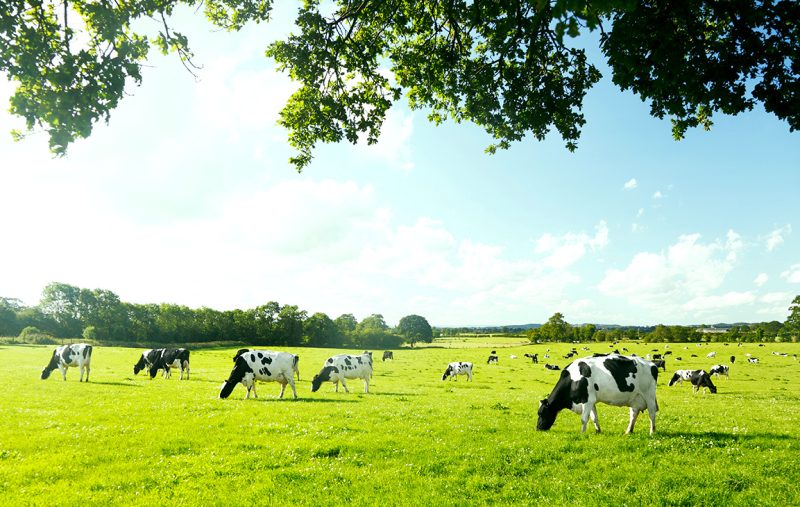
The Correlation Is Real but Not Constant
The correlation between dairy prices and NZD/USD is real, measurable, and variable. Over the past decade, the rolling 12-month correlation between the GDT Price Index and NZD/USD has ranged from around 0.3 in weak periods to above 0.7 during strong alignment. The average sits somewhere around 0.5, meaning dairy prices explain roughly a quarter of NZD variance on a typical rolling basis — significant but far from the whole story.
The correlation tightens during periods when dairy prices are trending decisively. The 2014-2015 dairy price collapse, when WMP fell from over USD 5,000 per tonne to below USD 2,000, produced one of the strongest dairy-NZD correlations on record. NZD/USD tracked the decline almost in lockstep, falling from above 0.8800 to below 0.6500 over the same period. The 2021-2022 recovery, driven by post-COVID restocking and strong Chinese demand, similarly produced a tight correlation as both dairy prices and NZD/USD rallied together.
During the 2023-2024 period, the correlation moderated. Dairy prices were relatively stable within a range, which reduced their explanatory power because the NZD was responding more to RBNZ rate expectations and global risk sentiment than to incremental dairy moves.
This is the key insight: the dairy-NZD correlation is strongest when dairy is trending and weakest when dairy is range-bound. For traders, this means the dairy lens is most valuable precisely when dairy prices are moving — which is when you need it most.
When the Correlation Breaks Down
Three scenarios regularly decouple dairy prices from NZD, and recognising them prevents you from over-relying on a single analytical framework.
The first is USD dominance. When the US dollar is moving sharply — say, on a Fed rate surprise or a US fiscal shock — it overwhelms all other drivers for most currency pairs. NZD/USD can fall 3% in a week on broad USD strength even if dairy prices are rallying. The dairy signal is still present in the data, but it is buried under a much larger force. In these periods, NZD/AUD is a better read on dairy’s impact because it strips out the USD element.
The second is global risk-off events. NZD is classified as a “risk currency” due to NZ’s small, open economy and structural current account deficit. During severe risk-off episodes — a banking crisis, a pandemic scare, a geopolitical escalation — capital flees small currencies for the safety of USD, JPY, and CHF regardless of fundamentals. Dairy prices could be at record highs and the NZD would still sell off if markets were in genuine panic.
The third is domestic NZ policy surprises. An unexpected RBNZ rate move, a change in NZ government policy affecting foreign investment, or a significant political event can shift NZD independently of commodity prices. The August 2024 surprise cut sent NZD sharply lower on a day when dairy prices were stable.
The dairy-NZD correlation does not break permanently in these scenarios — it reasserts itself once the shock is absorbed — but for the duration of the disruption, using dairy as your sole NZD indicator will mislead you.
China Risk: When the Biggest Customer Changes Its Mind
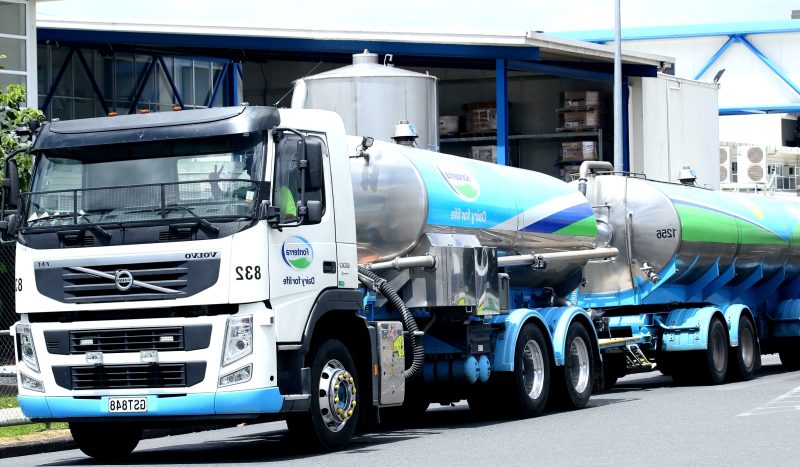
Demographic Headwinds and the Birth Rate Cliff
The structural bull case for Chinese dairy imports — unlimited demand from a population that had permanently shifted to imported products — is being quietly revised by demographics. Chinese births fell from 17.86 million in 2016 to 9.56 million in 2022 and continued declining. Each year’s smaller birth cohort represents a smaller base of infant formula consumers 12-18 months later. The maths is unforgiving: roughly half the potential customers have disappeared in less than a decade.
The impact on NZ dairy has been partially masked by three factors:
– Chinese consumers are buying higher-value products per child as incomes rise, partially offsetting the volume decline with price increases
– Dairy demand from Chinese adults has grown — liquid milk consumption, yoghurt, and cheese are expanding as dietary habits shift
– NZ exporters have diversified within China toward food service and ingredient supply rather than relying solely on infant formula channels
But the direction is clear. The premium that NZ dairy commanded because of infant formula demand is structurally eroding. The GDT Price Index in real terms has been lower in the 2020s than the 2014-2015 peak despite a weaker NZD, and the composition of Chinese buying at GDT auctions has shifted toward commodity-grade WMP rather than premium infant-grade products.
For NZD traders, this means the dairy tailwind that supported the currency through the 2010s is gradually weakening. Dairy still matters enormously — it is still the single largest NZD driver — but its peak influence may have passed.
Chinese Domestic Production and the Self-Sufficiency Push
Beijing has made dairy self-sufficiency an explicit policy goal, and the investment is visible. Chinese domestic milk production has risen from approximately 33 million tonnes in 2020 to over 41 million tonnes by 2024, driven by government-backed construction of large-scale dairy farms. These are not the small family operations that produced the contamination scandal — they are industrial-scale facilities housing tens of thousands of cows, built with modern processing technology and rigorous quality controls.
Full self-sufficiency remains unlikely in the medium term. China’s domestic production covers roughly 70-75% of consumption, and closing the remaining gap would require further massive investment in an industry that faces its own challenges: water scarcity in northern China, feed cost volatility, and the simple biological reality that dairy herds take years to build. But marginal import replacement is already measurable. Chinese dairy import volumes have plateaued and in some categories declined since 2022, even as domestic consumption continued growing.
For GDT auctions, this shows up primarily in volumes rather than prices. The quantity of product sold at each auction has trended lower as Chinese buyers source more domestically. Prices have been supported by supply management on Fonterra’s side (offering less product to maintain price levels), but this is a defensive strategy rather than a growth story.
NZD traders should watch Chinese import volume data from NZ trade statistics — a persistent decline in volumes, even with stable prices, signals that the demand base is structurally shrinking.
Geopolitical Scenarios NZD Traders Should Monitor
New Zealand’s trade concentration in China is unusual among developed economies and represents a specific vulnerability for the NZD that traders should factor into their risk models. Approximately 25% of NZ’s total goods exports go to China, with dairy representing the largest single category. No other G10 currency has equivalent exposure to a single non-allied trading partner.
Australia’s experience provides a cautionary template. When the Australia-China relationship deteriorated in 2020-2021, Beijing imposed tariffs and informal trade barriers on Australian wine, barley, coal, timber, lobster, and beef. Australian exports to China dropped sharply in affected categories. New Zealand dairy was not targeted during that period, partly because NZ maintained a more conciliatory diplomatic posture and partly because China needed NZ dairy imports more than it needed Australian wine. But the precedent established that trade flows with China carry political risk that can materialise quickly.
The practical implication for NZD traders is that China risk belongs in your scenario analysis. A deterioration in NZ-China relations sufficient to affect dairy trade would hit the NZD through multiple channels simultaneously: lower export revenue, wider current account deficit, lower terms of trade, and a risk premium on NZ assets. The probability is low in any given year, but the impact would be severe and the NZD’s reaction would be sharp.
Monitoring diplomatic signals — ministerial visits and trade negotiations, and Chinese state media coverage of NZ — is not a traditional part of forex analysis, but for NZD traders it is a form of tail-risk management that the standard macro toolkit does not cover.
Trading the Dairy-Dollar Link in Practice
Building a GDT Trading Calendar
The twice-monthly GDT auction schedule creates a natural rhythm for NZD trading, and building a structured calendar around it makes the dairy-dollar link actionable rather than theoretical.
The preparation starts several days before each auction. NZX dairy futures trade on the New Zealand Exchange and provide a real-time gauge of market expectations. If NZX WMP futures have been drifting higher in the week before a GDT auction, the market is expecting a positive result, and the NZD may have already partially priced it in. A strong GDT result against rising futures is less surprising than one against falling futures. Checking this before the auction tells you how much surprise value is available.
Chinese customs data, published monthly, provides the demand context. If Chinese dairy import volumes for the prior month showed a recovery, you have a fundamental reason to expect stronger bidding at GDT. If imports were weak, caution is warranted even if NZX futures look firm. Fonterra’s quarterly production updates and seasonal forecasts add the supply side — a dry autumn in the Waikato might constrain supply and support prices independently of demand.
The position sizing should reflect the expected magnitude:
– All signals aligned (rising futures, strong Chinese imports, constrained NZ production): standard position size
– Mixed signals: smaller position
– Three consecutive moves in one direction: extra caution, because mean-reversion pressure builds and the surprise threshold is higher
Using Dairy as a Leading Indicator, Not a Trading Signal
The most common mistake traders make with the dairy-NZD relationship is treating each GDT auction as a standalone trading signal. A single auction result is a data point. A trend across four or five consecutive auctions is a signal. The distinction matters because individual auctions can produce noisy results — a single large buyer stepping back or stepping in can move prices without reflecting broader demand conditions.
A simple but effective approach is to track the rolling four-auction average of GDT price changes. When this average is positive, dairy prices are in an uptrend. When negative, they are in a downtrend. The edge appears when the dairy trend and the NZD trend diverge — when dairy prices are rising steadily but NZD/USD has not yet responded, or when dairy is weakening but the NZD remains supported by other factors.
These divergences do not persist indefinitely. The currency eventually catches up to the commodity trend, because the terms-of-trade and current-account channels described earlier create a gravitational pull that other forces can delay but not cancel.
A trader who identifies a divergence — four strong GDT auctions with NZD/USD flat or declining — has a medium-term setup with fundamentals on their side. The timing of the convergence is uncertain, but the direction is supported by the strongest structural relationship in NZ forex fundamentals. Dairy does not explain everything about the NZD, but it explains the one thing that no other indicator does: the actual economic value that New Zealand creates and sells to the world.
The dairy-dollar link is not a hidden pattern waiting to be discovered — it is the most transparent fundamental relationship in NZ forex. The supply chain is visible, the data is public, and the transmission mechanisms are well understood.
What separates profitable use of this information from noise trading is patience: tracking the trend across multiple auctions rather than jumping on headlines, and recognising the periods when dairy’s signal is buried under larger forces. The cows do not stop producing milk because the Fed raised rates.