 Smart
SmartNZD/AUD does not get the attention of NZD/USD, but it tells a cleaner story. By stripping out the noise of US dollar moves, the trans-Tasman cross rate isolates what is actually happening in the New Zealand economy relative to its closest peer.
Dairy versus iron ore, RBNZ versus RBA, and a 20-year range that keeps punishing traders who forget that these two economies are neighbours, not twins.
Why the Trans-Tasman Cross Rate Deserves Its Own Analysis
Two Economies, One Neighbourhood, Different Engines
New Zealand and Australia sit 2,000 kilometres apart, share a free labour market, watch each other’s rugby, and run economies that could hardly be more structurally different. New Zealand exports dairy, meat, timber, and education services. Australia exports iron ore, coal, liquefied natural gas, and financial services. New Zealand’s GDP sits around NZD 400 billion; Australia’s is roughly five times that.
These structural differences are precisely what makes NZD/AUD interesting as a currency pair. When you trade NZD/USD, you are making a bet on both New Zealand’s economy and the US dollar’s trajectory. When you trade NZD/AUD, you are making a much more specific bet: is New Zealand’s economic outlook improving or deteriorating relative to Australia’s? The common factors — global risk appetite, Chinese demand, commodity supercycles — largely cancel out because both currencies share similar exposure to them.
The result is a pair driven by divergence rather than direction. NZD/AUD does not care much whether global growth is accelerating or slowing. It cares whether dairy prices are outperforming iron ore, whether the RBNZ is tightening faster than the RBA, and whether New Zealand’s housing market is cooling while Australia’s is heating up. For traders who want to express a view on New Zealand’s relative prospects without simultaneously betting on the greenback, this is the pair.
The NZD/AUD as a Leading Indicator for NZD/USD
One of the more useful properties of NZD/AUD is its tendency to signal NZD-specific weakness or strength before that signal appears in NZD/USD. The mechanism is straightforward: because AUD and NZD share similar risk profiles, when NZD/AUD breaks down it means the NZD is weakening against its closest peer — a cleaner signal than NZD/USD, which might be moving on USD strength rather than NZD weakness.
In practice, this has played out repeatedly. In the months before the RBNZ’s August 2024 surprise cut, NZD/AUD had already been drifting lower for weeks as the NZ economic data deteriorated more quickly than Australia’s. NZD/USD was choppy during the same period because US dollar moves were masking the NZD weakness. Traders watching the cross rate had an earlier and cleaner signal that something was shifting in the NZ outlook.
The same pattern works in reverse. When NZ dairy prices surged in early 2024 while Australian iron ore was under pressure from slowing Chinese steel demand, NZD/AUD rallied from below 0.9100 toward 0.9300 over several weeks. NZD/USD followed, but later and less cleanly, because it was simultaneously dealing with a broad USD move. The cross rate told the story first.
This does not mean NZD/AUD is a crystal ball — but it is a useful filter that strips away noise and highlights when a move is being driven by NZ fundamentals rather than external forces.
Stripping Out the USD Noise
Every currency pair carries the baggage of both currencies. When NZD/USD drops, you need to determine whether the NZD weakened, the USD strengthened, or some combination. This is not a trivial distinction — the appropriate trading response depends entirely on the answer, and getting it wrong means treating a USD story as an NZD story.
NZD/AUD solves this problem by construction. Both currencies are small, open-economy, commodity-linked dollars with similar credit profiles and similar sensitivity to global risk appetite. When risk sentiment shifts — say, a global equity selloff or a Chinese growth scare — both NZD and AUD typically move in the same direction. The NZD/AUD cross rate barely registers these events because the moves cancel out.
What it does register are the divergences that matter for NZ-specific analysis: relative economic data, relative monetary policy, and relative commodity performance.
For a New Zealand-based trader, this has practical value beyond pure analysis. If you are running a portfolio of NZD positions and want to hedge your NZ-specific exposure without taking on USD risk, NZD/AUD is the natural instrument. If you hold NZD/USD long and want to assess whether your thesis is intact, checking NZD/AUD tells you whether the NZD side of your trade is working independently of whatever the dollar is doing. It is the control experiment for your NZD view.
Dairy Versus Iron Ore: The Commodity Tug of War
Fonterra Auctions and the NZ Side of the Equation
Dairy is New Zealand’s largest export earner, accounting for roughly a quarter of goods exports by value. The Global Dairy Trade auction, held twice monthly, is the primary price discovery mechanism for NZ dairy products on international markets. For NZD/AUD traders, GDT results are a recurring fundamental catalyst — and one of the few data points that moves the NZ side of the cross without affecting Australia at all.
The auction runs overnight New Zealand time, with results typically available by early morning. The headline number is the GDT Price Index, expressed as a percentage change from the previous auction. A 3-5% move in either direction is enough to shift NZD/AUD, particularly if the result contradicts the prevailing trend. A series of strong auctions over two or three months can push NZD/AUD 100-200 pips higher as the market reprices New Zealand’s terms of trade.
The transmission mechanism runs through several channels. Higher dairy prices directly improve New Zealand’s current account balance, which supports the NZD on a flow basis. They also improve Fonterra’s farmgate milk price forecast, which feeds into rural incomes, consumer spending, and eventually GDP — all of which the RBNZ monitors when setting monetary policy. A dairy rally is not just a commodity move; it is an upgrade to the entire NZ economic outlook, and the NZD/AUD cross rate reflects that.
Iron Ore Price Swings and the AUD Side
Iron ore is to Australia what dairy is to New Zealand, except on a much larger scale. Iron ore and related metals account for roughly a third of Australian goods exports, and fluctuations in the iron ore price have a direct and measurable impact on AUD. When iron ore rallies, AUD strengthens; when it sells off, AUD weakens. The NZD/AUD cross rate captures this on the denominator side — a weaker AUD from falling iron ore prices pushes NZD/AUD higher even if nothing has changed in New Zealand.
Chinese steel production is the primary demand driver for Australian iron ore. When Chinese property construction was booming through the mid-2010s, iron ore prices supported a strong AUD and NZD/AUD spent extended periods below 0.9000. As Chinese property entered its prolonged downturn from 2022 onward, iron ore came under intermittent pressure, and the AUD lost one of its key supports.
The mid-2024 period illustrates the dynamic well. Iron ore dropped from around USD 130 per tonne in January to below USD 100 by September as Chinese steel demand weakened. This dragged AUD lower against most currencies, but the effect was particularly visible in NZD/AUD because the NZ side had its own support from firm dairy prices. The pair pushed above 0.9200 — a level it had not seen in months — driven almost entirely by the Australian side of the equation weakening.
Traders who tracked the iron ore-AUD relationship had a clear signal that the cross rate was being pushed higher by AUD weakness rather than NZD strength, which informed their positioning for an eventual mean reversion.
When Both Commodities Move Together
The cleanest NZD/AUD trading signals come from commodity divergence — dairy rallying while iron ore falls, or vice versa. But there are extended periods where both commodities move in the same direction, typically because the underlying driver is broad Chinese demand that lifts all commodity boats or sinks them together.
During a synchronised commodity rally, NZD/AUD tends to compress into a narrow range. Both currencies are gaining against the USD and EUR, but neither is gaining against the other because their respective commodity tailwinds are proportional. The pair might trade within a 100-pip range for weeks, frustrating breakout traders and rewarding those who fade the boundaries.
These periods of compression are not wasted time for analysis, though. They build potential energy. When the correlation eventually breaks — and it always does, because dairy demand and iron ore demand are ultimately driven by different end markets — the NZD/AUD breakout from the compressed range tends to be sharp and directional.
A trader watching for the divergence can identify the breakout trigger: a weak GDT auction during an iron ore rally, or a Chinese steel production cut while dairy demand holds firm. The range during the correlated period defines natural support and resistance for the subsequent move. If NZD/AUD has been trading 0.9050-0.9150 for a month and then dairy tanks while iron ore rallies, the break below 0.9050 is a meaningful signal that the cross rate is repricing for a new commodity reality.
RBA Versus RBNZ: The Policy Divergence Trade

Rate Differentials and the Carry Component
Interest rate differentials are the gravitational field of currency markets, and for NZD/AUD the differential between the RBNZ’s OCR and the RBA’s cash rate determines whether holding NZD against AUD earns you money or costs you money overnight. When the OCR sits above the RBA rate, NZD/AUD longs receive positive carry — a small daily payment for holding the position. When the RBA rate is higher, the carry is negative.
This carry component matters more than many retail traders appreciate. Over weeks and months, positive carry accumulates into meaningful returns or costs. During periods of low volatility, carry-seeking capital flows into the higher-yielding currency, creating a self-reinforcing trend. NZD/AUD drifts higher when NZ rates lead Australian rates, not because of any sudden catalyst but because institutional investors are earning a return simply by being long.
The danger comes during volatility spikes. Carry trades are inherently short volatility — they make money steadily in calm markets and lose money violently when conditions shift. A global risk event can unwind months of carry-driven NZD/AUD appreciation in days, as leveraged positions are closed simultaneously.
The 2024 easing cycle saw this play out in miniature: as the RBNZ began cutting while the RBA held, the carry advantage shifted toward Australia, and the gradual capital flow reversal weighed on NZD/AUD over subsequent months.
The 2024-2025 Divergence: RBNZ Cutting While RBA Held
The period from mid-2024 through early 2025 provided a textbook case of how monetary policy divergence drives a cross rate. In August 2024, the RBNZ surprised markets with a 25bp cut, beginning its easing cycle. The RBA, facing stickier Australian inflation and a more resilient labour market, held its cash rate steady. The divergence was immediate and directional.
NZD/AUD traded around 0.9150 before the August RBNZ cut. As the rate differential narrowed — and then inverted, with the RBA rate sitting above the OCR — the pair came under sustained pressure. The RBNZ followed with a 50bp cut in October, then further cuts into 2025, while the RBA held until February 2025 before finally beginning its own easing cycle with a cautious 25bp cut.
The cross rate’s response tracked the relative pace almost mechanically. Each RBNZ cut that was not matched by the RBA pushed NZD/AUD lower. When the RBA finally began cutting, the pressure eased but did not reverse entirely, because the RBNZ was cutting faster. The pair found a temporary floor around 0.8900 in late 2024, then oscillated in a range defined by the market’s expectation of where both central banks would eventually stop cutting.
The lesson is that the direction of rates matters, but the relative pace matters more. Two central banks both cutting can still produce a strong trend in the cross rate if one is cutting faster than the other.
Timing Trades Around Cross-Tasman Meeting Schedules
The RBNZ and RBA meeting schedules do not align neatly, which creates windows of concentrated event risk and windows of relative calm. The RBNZ meets seven times per year on pre-announced dates. The RBA meets eight times. Occasionally their meetings fall within days of each other, creating back-to-back event risk that can whipsaw NZD/AUD in both directions within a single week.
When the calendars cluster, the strategy question becomes whether to position before either meeting, between them, or after both:
– Before either meeting: carrying event risk from both central banks simultaneously — maximum uncertainty and widest effective spread
– Between meetings: lets you incorporate one decision while still exposed to the next
– After both: gives you the most information but the least advantageous entry price, because the market has already repriced
The practical approach for most traders is to identify the divergence risk in advance. If OIS pricing suggests the RBNZ will cut but the RBA will hold, the cross rate should move lower around those meetings. If both are expected to hold, the cross rate will likely be stable regardless of order.
The clustered meeting weeks are highest-risk when one bank is expected to surprise or when the consensus is split — those are the weeks where NZD/AUD can move 150 pips and the disciplined response is to reduce position size, not to increase it.
Technical Levels That Actually Matter
The Long-Term Range and Why Parity Is a Ceiling
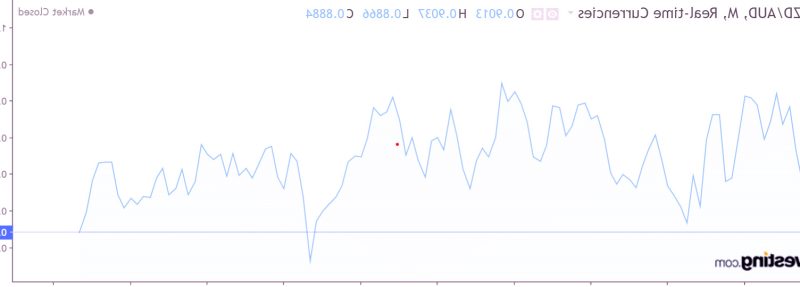
NZD/AUD has traded within a broad range of roughly 0.80 to 1.00 for the past two decades, and understanding why those boundaries hold is more useful than memorising the exact numbers. The ceiling near parity reflects a structural reality: New Zealand’s economy is fundamentally smaller and less diversified than Australia’s. For NZD/AUD to sustain above 1.00, you would need NZ economic conditions so superior to Australia’s that the structural discount evaporates — something that has happened only briefly and never sustainably.
The floor around 0.80 has a different explanation. At that level, the NZD becomes cheap enough on a purchasing power parity basis that real economy flows — New Zealanders travelling to Australia, trans-Tasman trade settlement, Kiwis sending money home from Australian jobs — provide natural demand. The CER (Closer Economic Relations) agreement means the economies are deeply integrated at the microeconomic level, and those integration flows act as a stabiliser at extremes.
Within this range, the pair shows a strong mean-reverting tendency, oscillating around a long-term average of approximately 0.91-0.92. Extended moves toward either extreme — say, below 0.85 or above 0.97 — have historically been followed by reversions to the mean within 6-18 months. This is not a guarantee, but it does suggest that the further NZD/AUD moves from its central tendency, the more likely a reversal becomes.
For traders, this means the pair rewards patience and range-trading strategies more consistently than breakout or trend-following approaches.
Key Support and Resistance Zones for the Current Cycle
Within the broader multi-decade range, the 2024-2026 period has established its own structure. The 0.9200 level has acted as a ceiling, capping multiple rally attempts. Each time NZD/AUD has pushed above 0.9200, selling pressure has emerged — partly from exporters hedging, partly from institutional mean-reversion trades, and partly from the technical level itself attracting offers.
On the downside, the 0.8750 zone proved significant in late 2024 as the RBNZ-RBA policy divergence pushed the pair lower. This level coincided with the point where the rate differential fully reflected the divergence in cutting cycles, and further NZD weakness required new catalysts rather than the existing narrative simply playing out. The area between 0.8750 and 0.8850 saw multiple bounces, forming a visible support zone on the weekly chart.
The 0.9000 level functions as the midpoint — a psychological level that the pair oscillates around during periods of relative equilibrium. When NZD/AUD is above 0.9000, the market is expressing a mild preference for NZ’s outlook. Below it, the preference tilts to Australia.
The level itself does not have magical properties, but it serves as a useful benchmark. If you are told NZD/AUD is at 0.8820, you know immediately that the market is pricing NZ weakness relative to Australia and that the pair is in the lower portion of its current range, with room to move either way.
Using NZD/AUD Technicals to Inform NZD/USD Positioning
NZD/AUD’s value extends beyond trading the pair itself. Because it isolates NZ-specific factors from broader currency movements, its technical picture can inform decisions on NZD/USD and other NZD pairs. The principle is straightforward: if NZD/AUD is breaking down through support, the NZ side of any NZD pair is under pressure, and you should treat NZD/USD longs with extra caution regardless of what the USD is doing.
In late 2024, NZD/AUD broke below the 0.9000 level and trended toward 0.8750 as the RBNZ-RBA divergence played out. During the same period, NZD/USD was choppy, alternating between rallies on USD weakness and selloffs on NZ-specific data. Traders who used the NZD/AUD breakdown as a filter would have favoured the short side of NZD/USD during that period, improving their timing relative to those trading NZD/USD in isolation.
The cross rate also helps with trade validation. If you have a bullish NZD/USD thesis based on, say, strong dairy prices, checking NZD/AUD tells you whether that bullishness is showing up in the cleanest NZD expression. If NZD/USD is rising but NZD/AUD is flat or falling, the move is likely USD weakness rather than NZD strength — and your dairy-driven thesis may not be playing out as expected.
Conversely, if both NZD/USD and NZD/AUD are rallying, you have confirmation that the NZD side is genuinely strong. One pair tells you the weather; the other tells you the climate.
The trans-Tasman cross rate is a barometer disguised as a currency pair. It measures something more specific and more useful than NZD/USD ever can: whether New Zealand’s economic story is getting better or worse relative to the economy most similar to its own.
For NZD traders, ignoring it is like navigating by compass while a GPS sits in your pocket.